
5 min read Step-by-step practice
Planning an assistance-dog pathway in Aotearoa
Start with suitability, reward-based foundations and an authorised organisation. Understand New Zealand certification before choosing an assistance-dog pathway.
 Aotearoa New Zealand
The training notebook / New Zealand
Free assistance dog training guides for the work between lessons. Start with a quiet room, a willing dog and one small goal.
Browse all 15 guides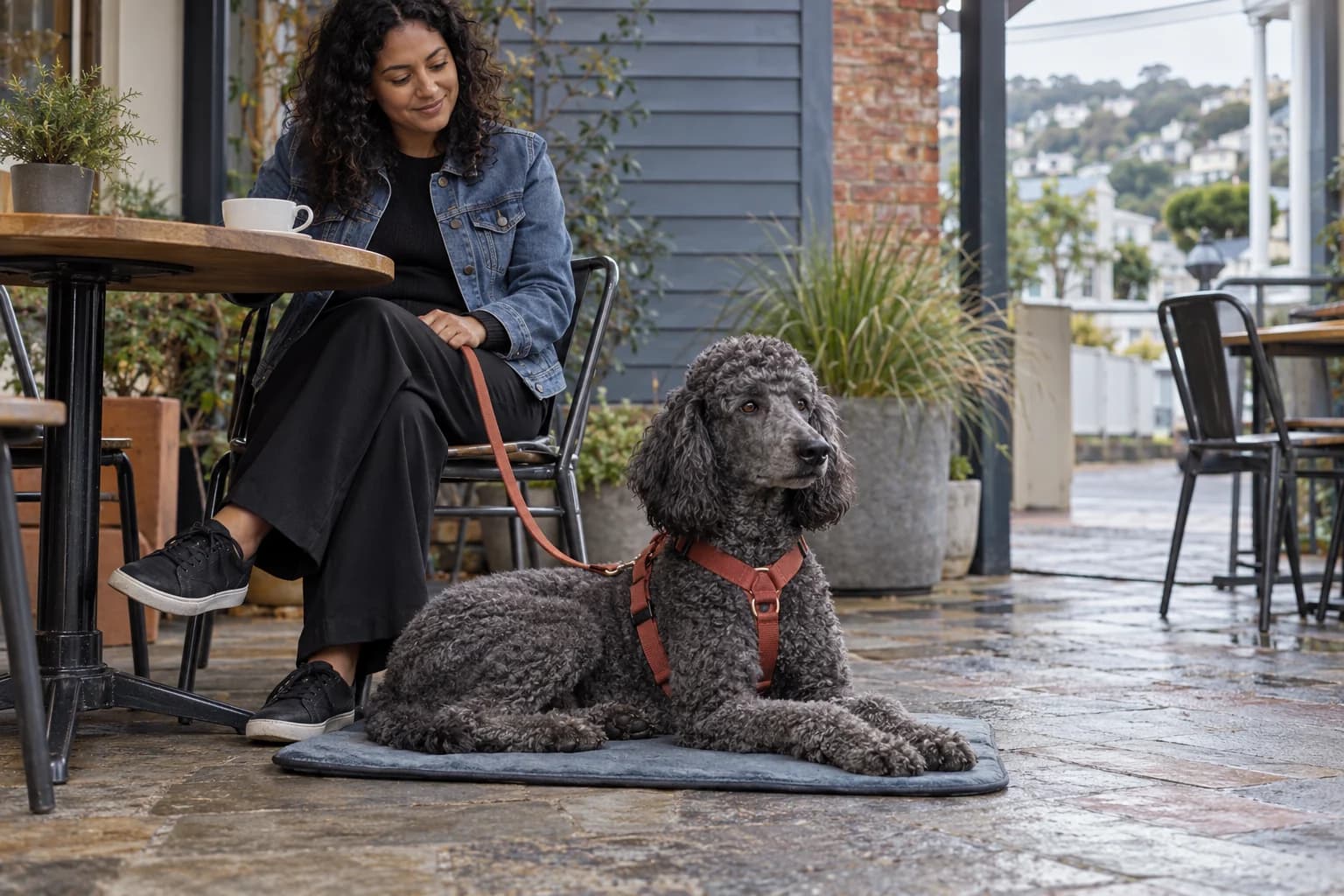
Before your first session
These guides discuss assistance-dog foundations. New Zealand law uses the term “disability assist dog” for dogs meeting its requirements. They cover reward-based foundations and preparation. Each dog’s suitability and disability-related tasks need individual consideration.
Begin with the New Zealand owner-training guide, then work through reward timing and reading your dog’s comfort. The reading order is a starting point, not a fixed timetable.
01 / Training guides
Suitability, welfare and a plan you can adapt to your own dog.
5 min read Step-by-step practice
Start with suitability, reward-based foundations and an authorised organisation. Understand New Zealand certification before choosing an assistance-dog pathway.
4 min read Step-by-step practice
Learn when to simplify or stop a training session, recognise changes in your dog’s body language and protect quiet recovery time at home.
4 min read Step-by-step practice
Use a simple assistance-dog training log to record context, rewards and welfare, then transfer a skill to new locations without increasing everything at once.
4 min read Step-by-step practice
Plan gentle puppy socialisation in New Zealand: safe observation, new surfaces and sounds, veterinary advice and practical signs to end a session.
02 / Training guides
Small, repeatable exercises for attention, movement and settling.
4 min read Step-by-step practice
Teach a clear reward marker, improve your timing and avoid common mistakes before starting assistance dog foundation exercises.
4 min read Step-by-step practice
Build a relaxed name response and voluntary check-ins, then practise handler focus around manageable everyday distractions.
4 min read Step-by-step practice
Practise loose-lead walking with rewards, short routes and sniff breaks. Learn what to change when your dog pulls or falls behind.
4 min read Step-by-step practice
Build a comfortable mat settle without forcing a stay. Practise relaxed behaviour, sensible duration and small household distractions.
4 min read Step-by-step practice
Build a rewarding recall in secure spaces, add manageable distractions and use a long line safely while your dog is still learning.
03 / Training guides
Take familiar skills into carefully chosen, permitted settings.
4 min read Step-by-step practice
A gradual plan for noticing other dogs, returning attention to the handler and walking away, with clear limits for barking, lunging or fear.
4 min read Step-by-step practice
Build a reward-based leave-it cue, practise safe food distractions and learn when to use a trade instead of repeating the cue.
4 min read Step-by-step practice
Prepare for a short café visit with mat practice, a suitable table, calm arrivals and a simple plan for leaving before your dog is overwhelmed.
4 min read Step-by-step practice
Prepare for a short bus, train or ferry journey in New Zealand: check the operator’s rules, practise boarding skills and make a plan for leaving early.
04 / Training guides
Build the component skills behind a useful, individual assistance task.
4 min read Step-by-step practice
Break a retrieve into small steps: take a soft item, release it willingly and bring it a short distance. Includes troubleshooting and safety limits.
4 min read Step-by-step practice
Teach your dog to touch an open hand voluntarily, then use the skill for simple positioning. A reward-based plan with accessible setup options.
About this library
Published by NZ Service Dogs. These guides bring together public guidance from animal welfare organisations, assistance dog providers and New Zealand authorities, with suggested exercises written for this library. Sources are linked at the end of each guide.
They are general educational material, not an individual behaviour assessment. A veterinarian or suitably qualified reward-based trainer can help with pain, fear, aggression or task suitability. Reading a guide or buying a record card does not establish public access eligibility.
Explore learning options